AI sovereignty isn’t about replacing vendors, it’s about controlling intent. In a world where models evolve every six months, enterprises must own the logic that governs decisions while treating execution as swappable. Control the architecture, not the tools.
Enterprises face a false choice: vendor lock-in or costly rip-and-replace. The third path: sovereignty-first architecture. Own the logic that defines strategy, delegate execution to vendors through interfaces that preserve inspectability, overridability, and portability.
GPUs made Nvidia dominant. CUDA made it irreplaceable. Now it's expanding into inference, robotics, and vertical integration. This isn't a hardware company, it's an AI platform consolidating power.
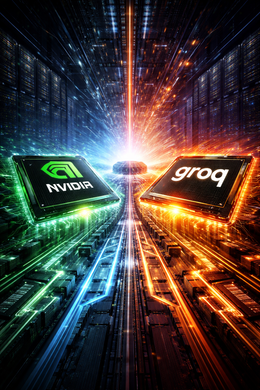
AI's bottleneck isn't compute—it's memory. GPUs sit idle 99% of the time during inference, waiting for data. Groq proved deterministic architectures can solve this. Nvidia's response? Strategic absorption. By integrating Groq's approach into Rubin, Nvidia closes the inference gap.
Sovereignty isn't lost in one decision, it’s transferred in a thousand integrations. Control resides not in data ownership, but in who owns the logic that decides what to do with it. Stop drifting into dependence on multi-tenant logic.