

Apple enters its third act, and John Ternus inherits both a fortune and a question
When Steve Jobs submitted his resignation as Apple's CEO on August 24, 2011, the tech press wrote about the handoff in elegiac tones. The man taking over, a lanky Alabama supply-chain engineer named Tim Cook, was respected inside the company and almost unknown outside it. Silicon Valley's conventional wisdom was that Apple's best days were behind it. Jobs, in his resignation letter, insisted the opposite. Most people thought he was being loyal.
Six weeks later, Jobs was dead. And Apple was left in the hands of the man who, in retrospect, may be the most successful non-founder CEO in modern corporate history.
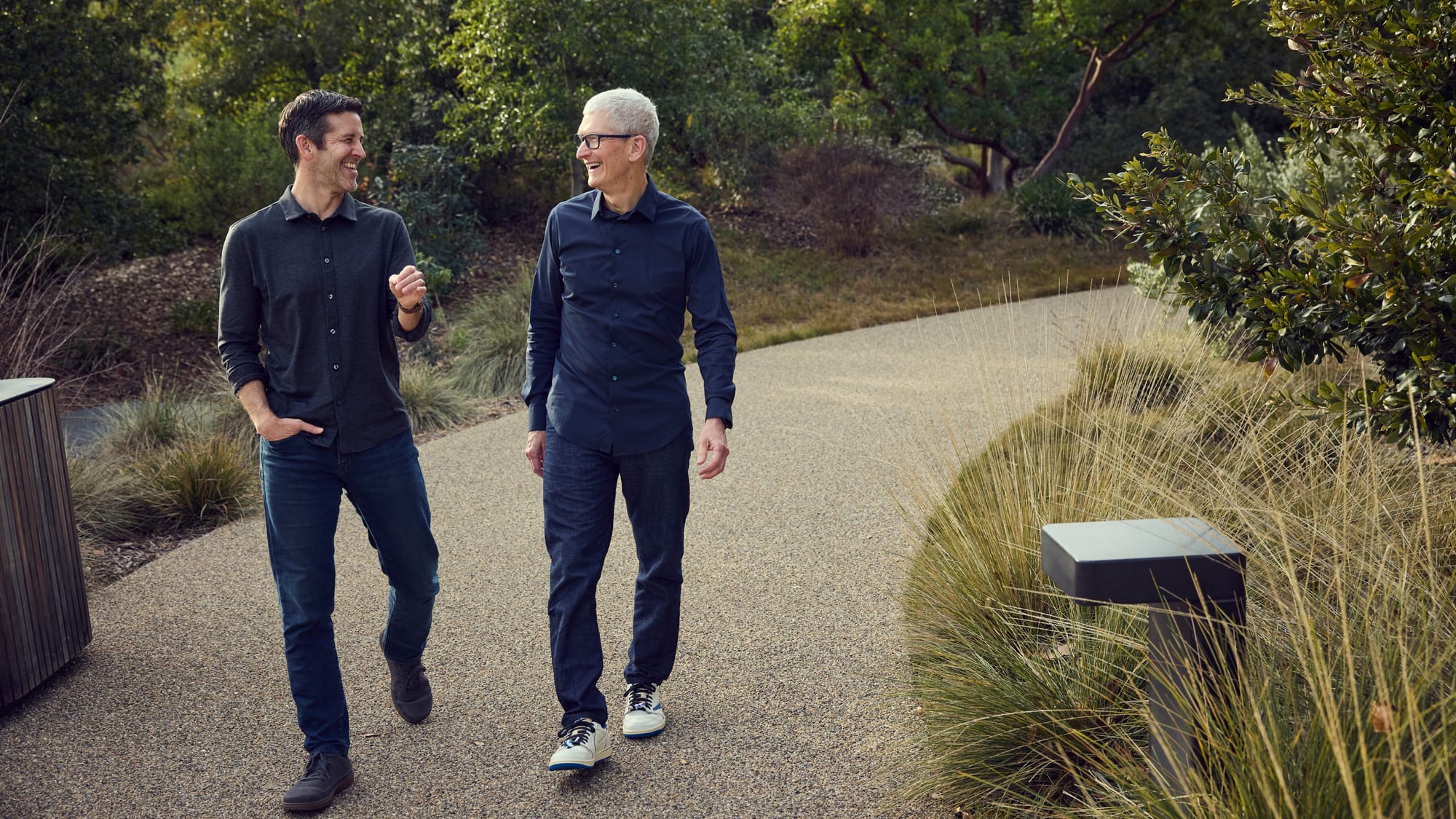
On April 20, 2026, Cook announced he would step down on September 1, handing the CEO role to John Ternus, the company's head of hardware engineering. He will stay on as executive chairman. The announcement came with all the theatrical understatement Cook himself has cultivated for fifteen years: a letter to employees, a clean timeline, a quiet transition. The company's market capitalization had grown from roughly $350 billion when he took over to just over $4 trillion by Monday's close, a roughly tenfold increase. The stock barely moved on the news. That, too, was very Cook.
The three things Cook actually added
If the Jobs era was defined by invention: the Mac, the iPod, the iPhone, the iPad, four category-creating products that rewired how human beings interact with computing, the Cook era added three structural things the company did not have before. All three are easy to undersell because none have a keynote moment.
The first is scale. Annual revenue quadrupled from $108 billion in 2011 to $416 billion in fiscal 2025. iPhone revenue alone grew more than fourfold over the same stretch. When Cook took over, Apple was selling roughly 72 million iPhones a year; by the time he hands off, the device's installed base has long since crossed the most-used-gadget-in-history threshold, and iPhones are sold by practically every major carrier in practically every country, in a product line that spans five models and a dozen colors. The logistical machine required to manufacture, ship, warehouse, and sell hundreds of millions of extremely complex devices a year, almost none of them defective, almost none recalled, is itself a technological achievement on the order of the iPhone. Cook built that machine, starting in 1998 when Jobs hired him away from Compaq to fix Apple's operations, then considered a disaster. By 2011, the apparatus he had designed was arguably the most valuable piece of intellectual property Apple owned that Jony Ive hadn't drawn.
The second is services. The App Store, Apple Music, iCloud, Apple TV+, Apple Pay, AppleCare, and the long-running advertising deal that makes Google the default search engine on Safari collectively generate roughly a quarter of Apple's revenue and more than 40% of its profits. Apple posted another all-time Services high in the June 2025 quarter and has continued to set new records roughly every 90 days since. This is the engine Jobs only gestured at, and the thing that pushed Apple from a hardware company with attached software into something closer to a recurring-revenue platform.
The third is silicon, and it is the one most often flattened in the telling. In 2020, Apple began shipping the Mac's first in-house processors, the M-series, ending a fifteen-year reliance on Intel. The bet was enormous and deeply vertical: replace a chip from the industry's most entrenched incumbent with one Apple designed itself, on an ARM architecture its phone team knew intimately. The M-series worked. It now spans from the iPhone-class chip inside the MacBook Neo to the Ultra-grade silicon inside Mac Studios and the current M5 generation. Measured by performance-per-watt and by the competitive differentiation it confers, Apple Silicon is the most consequential piece of hardware engineering to come out of Cupertino since the A-series iPhone chips, and, to be honest about it, the most Jobs-like thing Cook did in fifteen years. It was long-horizon, vertical, and looked slow to pay off, until it didn't. As will become clear, it also serves as the foundation for the AI argument that follows.
The ledger of trade-offs
Not everyone has been thrilled with how the rest was accomplished. Cook has been sued, investigated, and legislated against over the App Store's 30% take. He has been criticized for tying Apple's fate inextricably to China during a decade in which the U.S.–China relationship deteriorated almost without pause. The third-party developer community that underwrites iOS has spent much of the last decade feeling squeezed. Patrick McGee, whose book Apple in China has already become required reading in the industry, has argued persuasively that Apple didn't just depend on Chinese manufacturing; it actively built it, transferring know-how, capital, and industrial discipline into a country that has since become a strategic rival.
These critiques are fair, and Cook, in his more candid moments, probably knows they are. But CEOs are judged on a scoreboard. The scoreboard says Apple is in the best financial shape of its life. It says the iPhone line is selling at a record pace. It says the Mac is finally beating Windows machines on performance-per-watt. And it says Services will cross $100 billion in annual revenue sometime on Ternus's watch.
What the scoreboard does not say is what happens next.
The engineer who was always there
John Ternus was born in 1975 or 1976, graduated from the University of Pennsylvania in 1997 with a mechanical-engineering degree, and joined Apple in 2001 after four years designing VR headsets at a small firm called Virtual Research Systems. His first project inside Apple was the Cinema Display. He spent the next decade and a half as an engineer's engineer, doing work, not taking credit, and was promoted to vice president of hardware engineering in 2013, then to senior vice president in 2021, when Dan Riccio stepped aside to focus full-time on what would become the Vision Pro.
Ask current and former Apple employees about Ternus, and the phrases that come back are striking for how unremarkable they are. He is described as thoughtful, levelheaded, approachable, and technically deep. He prefers to get his information from the engineer who actually built the thing, rather than from the engineer's manager. He races a Porsche at Laguna Seca on weekends and clocks respectable lap times for an amateur. He swam at Penn. He doesn't appear to maintain an active X account.
His fingerprints are on more of modern Apple than most outsiders realize. He led hardware engineering on the iPad from the beginning. He oversaw AirPods, an audacious and much-mocked product, before it quietly became a $35-billion-a-year business. He was a central figure in the Mac's transition to Apple Silicon, working alongside the chip architect Johny Srouji, who, on Monday, was promoted to Chief Hardware Officer, effectively stepping into Ternus's old seat. Last fall, Ternus was the public face of the iPhone 17 launch and the radically thin iPhone Air. Last month, he unveiled the MacBook Neo, Apple's new affordable laptop, which brings costs down by using an iPhone-class chip instead of the M-series silicon in higher-end Macs.
If you asked a committee of business-school deans to design an Apple CEO for 2026, they would probably design something very close to Ternus: a deeply technical insider, fluent in the materials-and-process world Cook systematized, with enough design literacy to speak the Ive dialect and enough patience to navigate Apple's famously functional org chart. What they would not design is a showman, or a category-inventor, or a big-bet gambler. Ternus is not known for taking big swings. He is known for landing them.
The elephant in Cupertino
The complication is that landing swings may no longer be enough.
Over the last two years, the center of gravity in consumer technology has quietly shifted away from hardware and toward generative AI. OpenAI, Anthropic, and Google have each spent tens of billions of dollars on model training and data-center infrastructure. Microsoft's AI capital expenditures in 2026 will clear $150 billion. Meta is not far behind. Apple, meanwhile, rolled out Apple Intelligence in late 2024 to a broadly disappointed reception, delayed the promised next-generation Siri twice, and in January of this year capitulated to the obvious: it signed a reported $1-billion-a-year deal with Google, gaining access to a custom 1.2-trillion-parameter Gemini model to power the next version of Siri.
This is not how Apple usually does things. The Cook Doctrine, as Cook himself articulated on a 2009 earnings call, explicitly commits the company to owning the primary technologies behind its products and to entering markets only where it can make a significant contribution. Apple's entire cultural identity is built around vertical integration: its own chips, operating systems, radios, fabrics, and alloys. Apple, as a matter of instinct, does not white-label somebody else's intelligence and attach a Siri logo.
Except, now, it does.
The fair rebuttal, and it is a real one, is that this only matters if intelligence actually centralizes toward cloud models and devices become dumb portals to them. That is not a settled prediction. Apple's counter-bet is on-device inference, privacy by architecture, tight OS integration, and the responsiveness you only get when the model runs on the silicon in your hand. If latency, battery, and privacy become the axes that matter, Apple is better positioned than any company on earth, because it is the only one designing the chip, the OS, and the device as one system.
And the moat underneath the counter-bet is already built. Apple has roughly two billion active devices in circulation, and the last several generations of iPhones, iPads, and Macs ship with Neural Engines designed specifically for on-device inference. No other company has anything close to that distribution of AI-capable silicon. Google can't ship a billion Pixels overnight. Microsoft doesn't control the PC supply chain or the NPU roadmap inside it. OpenAI has no hardware at all. If on-device becomes the axis that matters, Apple is not starting from zero; it has already shipped. Every iPhone 15 Pro and up, every M-series Mac, every recent iPad is a latent AI endpoint waiting for software to catch up to the silicon. That position is not a hope; it is a delivered, installed, running fact. And the M-series bet from 2020 is the reason it exists. Cook paid for this moat years before anyone knew it was the moat to have.
That is the bull case, and it is a serious one. There is a version of the next five years where Apple's AI critics look like the BlackBerry defenders did circa 2008; right about the near-term gap, wrong about which axis the market would eventually reward.
Two things remain uncomfortable, even if we grant all of that. The first is Apple's own behavior: the company evaluated OpenAI, Anthropic, and Google, and concluded it needed a frontier model it could not build in-house on any relevant timeline. Firms don't break their own doctrine unless they judge the alternative worse, and the installed-base advantage doesn't help you if the model running locally is markedly dumber than the model running in Mountain View. The second is that even if on-device inference eventually wins the interface layer, the economic layer of Apple: Services, the App Store, search-default payments, rests on a screen-and-tap model of computing that a chatbot-native interface disintermediates regardless of where the model runs. The phone can stay smart, while the business around it can still erode.
What Ternus has to do
Ternus, then, inherits an Apple that is, in the traditional sense, firing on all cylinders, and in the emerging sense, quietly behind at the frontier and quietly ahead at the edge. He has to solve for both at once.
The Siri revamp has to ship, and it has to be good. If it isn't, the Gemini deal becomes a millstone, and the narrative that Apple has lost the AI plot will calcify into accepted fact. If it is good, Apple buys time and uses it to do what it is best positioned to do: push progressively more capable models onto the device itself. Ternus's job, in the AI dimension, is less to invent a frontier model than to widen the gap between running intelligence on Apple hardware and running it anywhere else: faster, more private, more tightly integrated with the operating system and the user's data. That is a hardware-native CEO's problem, and there is an argument that Apple picked the right person for it precisely because it is.
Beyond Siri, Ternus has to deliver a new hardware category, or at least a credible theory of what one looks like. Cook's record here is more mixed than his critics allow. Over a decade, the Apple Watch became the world's best-selling wearable computer and a health platform with real medical utility. AirPods effectively created the modern wireless-earbud category and now double as over-the-counter hearing aids, which is its own small technological revolution. Neither would exist without the iPhone, but dismissing them as accessories undersells the category-building. Where the Cook era did fall short was in delivering a platform that could stand on its own. The Vision Pro was meant to be that platform, and so far it isn't; it has underperformed commercially and is increasingly reading as a bet that didn't come in. The next wave: smart glasses, wearable AI devices, ambient computing, whatever the industry settles on calling it, is exactly the problem where a hardware-native CEO with a design background ought to have an edge.
And Ternus has to manage what is arguably Cook's most uncomfortable inheritance: the supply chain. The same apparatus that delivered Apple's astronomical margins is now the most fragile part of the company's future, exposed to tariffs, export controls, and the possibility of a Taiwan contingency that could freeze TSMC production overnight. Apple has spent the last few years quietly diversifying into India and Vietnam, but the majority of its manufacturing still depends on a country its own government increasingly treats as an adversary. Untangling that dependence is a ten-to-fifteen-year project, and Ternus has to start it without breaking the thing that funds everything else.
The long handoff
It is fashionable, when a CEO of this stature leaves, to talk about legacies. Cook's is settled: he took a company already legendary for its products and made it legendary for the business it was. He proved that an operator could be a visionary in the accountant's sense, that financial architecture, carefully tended, compounds into something that looks, from the outside, like magic. And he did the one thing operators are not supposed to do: he underwrote a multi-year, vertical, Jobs-scale technology bet in Apple Silicon, and it paid off, in ways that, five years on, turn out to matter for reasons even Cook probably didn't fully foresee in 2020.
The more interesting question is whether the things he didn't do will prove costly. The Gruber critique that Apple should have taken a smaller slice of the App Store may age well or simply age. The McGee critique, that Apple made its own strategic bed in Beijing, is already aging quickly. And the AI critique, that Apple under-invested in frontier model capability and will spend years catching up on top of someone else's infrastructure, is the one Ternus will be graded on. Its strongest form isn't that Apple is doomed in AI. It is: Apple is paying, in doctrine and in dollars, to buy time, on the theory that its 2 billion AI-capable devices will turn that time into an advantage. It is a reasonable theory, and the installed base is real. It is not yet proven.
In a commencement address at his alma mater in 2024, Ternus offered a line that, in retrospect, reads like a quiet credo. He told the engineering graduates to trust that they were as intelligent as anyone in the room, while resisting the assumption that they knew as much as everyone else did. It is an unglamorous sentiment, perfectly consistent with the man and perfectly consistent with the company he now runs. Whether that posture is enough to carry Apple through its next act, whether humility and engineering rigor can answer a generational technology shift the way they answered a decade of iPhone scaling, is the open question of the next five years.
Tim Cook leaves on his own schedule, in excellent health, with the stock near an all-time high, an executive chair waiting for him, and a successor he clearly believes in. That is roughly the best ending a CEO can script. Whether it turns out to be the right ending for Apple will depend, as always, on what the next guy builds, and on whether the silicon already in two billion pockets turns out to be the platform everyone else wishes they had.